
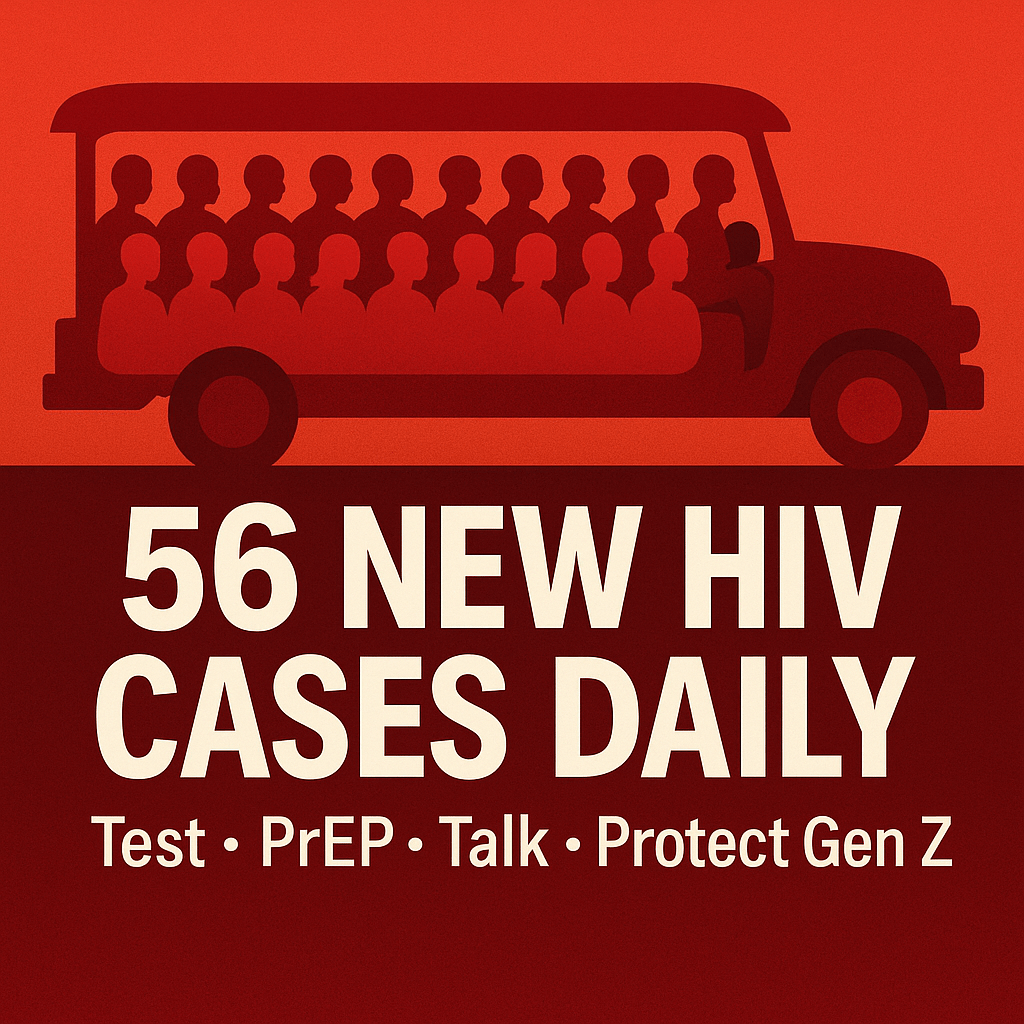
Picture yourself wedged inside a Pasig-bound jeep at rush hour. Now imagine two full jeeps—roughly fifty-six people—learning today that they’re HIV-positive. That isn’t a metaphor, it’s the new daily average the Department of Health recorded in June 2025, twice the rate logged a decade ago and high enough for officials to warn that we are facing an “uncontrolled” epidemic.
The grim arithmetic comes from more than five thousand fresh infections tallied in the first quarter alone, translating to about fifty-seven new cases every sunrise-to-sunset cycle and pushing the DOH to recommend a national public-health emergency. Experts say the curve is no longer climbing—it’s accelerating like a tricycle on a downhill road.
What keeps doctors up at night is who’s getting infected. Among Filipinos aged fifteen to twenty-five, cases have exploded by nearly five hundred percent in a single year, making Gen Z the reluctant face of the crisis and giving the Philippines the fastest-growing epidemic in the Asia-Pacific region.
Ask front-liners why and a familiar mix pops up: swipe-right hook-ups with zero condoms, a “di bagay ang latex” mentality, and a stigma so thick people would rather guess than get tested. Throw in post-pandemic revenge nightlife and HIV gets the perfect storm it needs to spread quietly from bar to boarding house.
Data also reveal a lopsided risk map. Roughly two-thirds of new diagnoses land in men who have sex with men aged mid-twenties to mid-thirties. Straight dudes in their twenties are catching up after unprotected hotel flings, while many trans women steer clear of clinics because discrimination still hangs in the air like second-hand smoke.
Yet the defensive gear is ready and, increasingly, affordable. One daily pill of Pre-Exposure Prophylaxis, or PrEP, slashes infection risk by up to ninety-nine percent and now costs about eighteen hundred to twenty-five hundred pesos a month at clinics like LoveYourself or select LGU hospitals, with subsidies trimming that even further for students and minimum-wage earners.
Worried about side effects? Most users feel nothing beyond a brief tummy rattle during the first week, and monthly follow-ups include kidney checks to keep things safe. You can pick up the pills at Pedro Gil, Taft, Mandaluyong, Cebu IT Park, and Davao Matina branches of LoveYourself, or even have them couriered in discreet packaging if you’d rather skip the clinic queue. Routine testing is the other non-negotiable. Republic Act 11166 guarantees that screening is voluntary, confidential, and free at most Social Hygiene Clinics, while the earlier RA 8504 even allows you to stay anonymous by using a code instead of your real name. Doctors suggest a check every three months or any time a risky night leaves you uneasy.
If that test does turn positive, the calendar starts, but the story doesn’t end. Lifelong antiretroviral therapy is free in government hubs, and guidelines push for initiation within seven days. Once your viral load drops to “undetectable,” science says you can’t pass the virus—a concept summed up in the mantra “U equals U.” That single fact has given thousands of Pinoys a clear path to dating, marriage, and even parenthood without fear.
Myths still lurk. You can’t eyeball someone’s status, herbal detox teas do nothing, and an HIV diagnosis is no longer a death sentence; caught early, life expectancy is almost normal. The bigger killer is silence, not the virus itself.
Your rights are iron-clad. RA 11166 slaps stiff fines and jail time on anyone who outs your status or fires you for it, a protection emphatically upheld by the Supreme Court. Knowing the law turns shame into leverage: if employers, landlords, or even relatives threaten you, they become the ones breaking the rules.
Cheat-Sheet
- Test early, test often. Libre at Social Hygiene Clinics, anonymous if you want—treat it like your quarterly oil change.
- PrEP + condom = iron-clad armor. One pill a day and latex in your pocket slash risk to almost zero.
- Start ART fast if positive. Within a week you can reach “undetectable,” meaning di ka na nakakahawa.
- Silence helps the virus; talk kills it. Share clinics, drop the stigma, and make safe sex normal Pinoy behavior.
So, what’s the play? Normalize the clinic run like an oil change before a road trip. If you juggle partners or even think you might, ask a doctor about PrEP and treat condoms with the same urgency you give your phone charger. Share links to testing centers; you never know who’ll click one at two a.m. when anxiety peaks. Most importantly, talk about HIV in the open. The virus thrives in whispers; it shrivels in well-lit conversation.
 Mike m. luster