
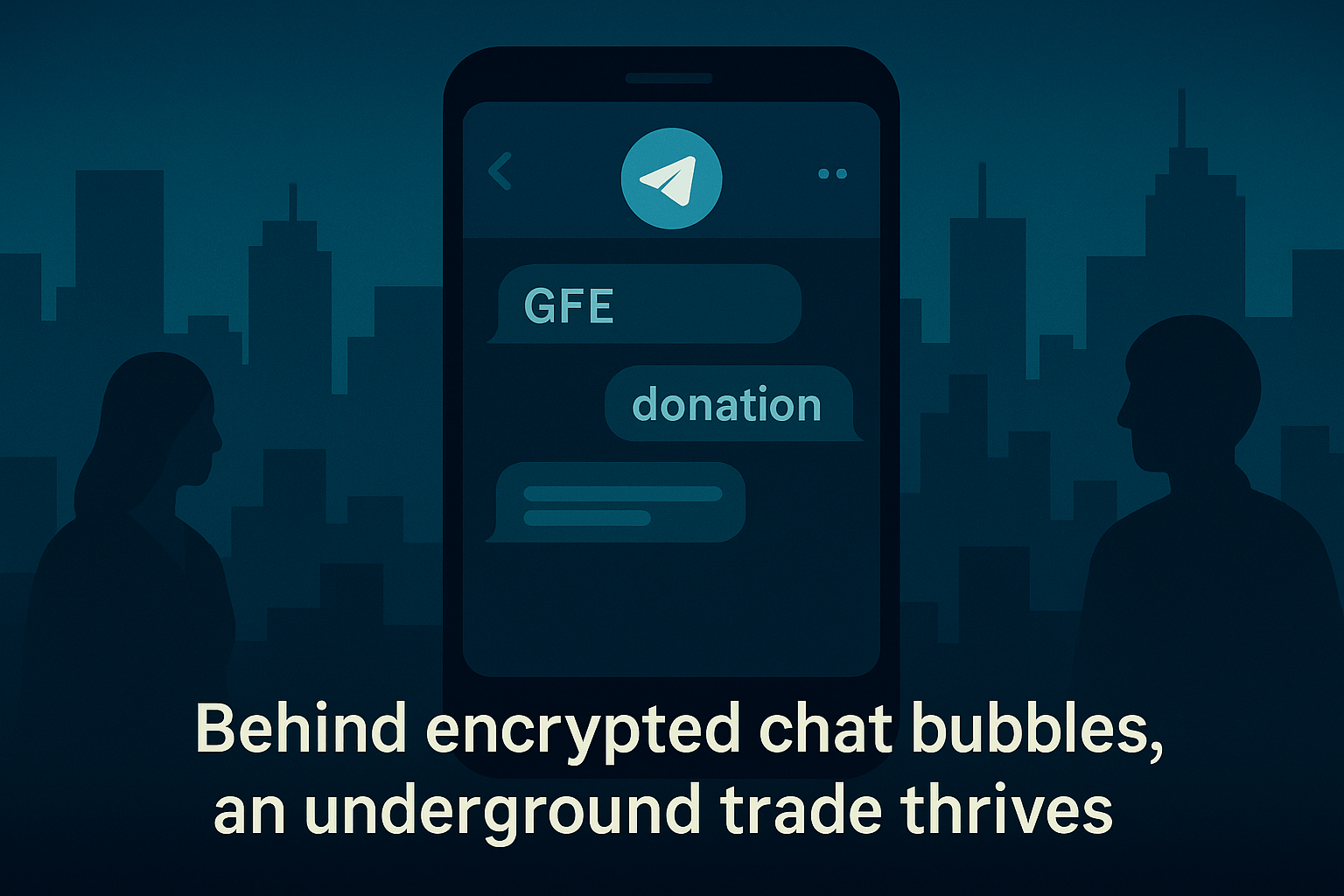
The sex trade is no longer just happening on the streets or inside dark massage parlors. These days, it has found a new home: Telegram, WhatsApp, and similar messaging apps. With just a few taps, users can join private groups, view “menus,” and book sexual services without ever stepping into a shady alley.
This digital shift has made the underground sex industry even more discreet, more flexible, and way harder to catch. But just because it’s online doesn’t mean it’s legal. In fact, it opens up even more serious legal problems.
So paano nga ba ito nangyayari? Why does it thrive on apps like Telegram? At ano nga ba talaga sinasabi ng batas?
How It Works: The New Digital Playground
Telegram, unlike most social media platforms, offers secret chats, private groups, disappearing messages, and usernames with no real names required. It’s practically built for privacy—which is why it’s become a go-to app for adult services.
Here’s how it usually works:
- You’ll see coded posts on Twitter, Facebook, or even TikTok saying “DM for exclusive group” or “Telegram link sa bio.”
- Once inside the group, you’ll find “lineups” or “menus”—pictures of women (sometimes men or LGBTQ+), their rates, services offered, and locations.
- Bookings are made through DMs or voice chats. Payment is often via GCash, Maya, or cryptocurrency.
- Most transactions happen within a day. Some even offer home service, hotel meetups, or “stay-in” packages.
May ibang groups na may monthly fee for access. Others operate on an invite-only basis para hindi basta-basta mapasok ng authorities or posers.
Why Telegram?
Apps like Telegram are perfect for this underground trade for three big reasons:
- Privacy features – You can hide numbers, delete chats, and keep identities hidden.
- Little to no moderation – Unlike Facebook, Telegram doesn’t scan or flag adult content unless someone reports it.
- Fast and easy access – Clients can browse and book in just minutes—parang Grab pero for adult services.
This setup is super attractive to both providers and clients who want discretion and speed.
What the Law Says
Despite the platform being online, prostitution is still prostitution, and it remains illegal under Philippine law—even if done through apps.
Here’s what can apply:
- Revised Penal Code – Prostitution is punishable by jail time (up to 6 months) and fines up to ₱20,000.
- RA 9208 – Anti-Trafficking in Persons Act – This law gets involved if there’s any form of force, coercion, or exploitation.
- RA 10175 – Cybercrime Prevention Act – Posting, offering, or promoting sex services online can be considered cybersex, which comes with heavier penalties, including imprisonment up to 12 years and fines up to ₱1 million.
- RA 9775 – Anti-Child Pornography Act – If minors are involved (even unknowingly), that’s a whole new level of offense with extremely serious consequences.
So in short, this is very illegal—even if it’s just being done in private group chats.
The Workarounds and Loopholes
Despite the laws, this type of online flesh trade continues. Bakit? Dahil matalino ang sistema.
- Fake names and photos – Many use aliases, stock photos, or filters to hide their real identities.
- “Donation” system – Instead of saying “bayad,” they say “donation”—to avoid directly saying it’s for sex.
- Temporary accounts – Some delete their Telegram profiles weekly to stay under the radar.
- Code words – Instead of “sex,” you’ll see terms like “GFE,” “SP,” “chill session,” “VIP service,” or “fun meetup.”
- No proof, no case – As long as there’s no caught-in-the-act moment or actual report, it’s hard to build a solid case.
Even if law enforcement gets into these groups, proving the transaction legally is tough, especially if everyone denies it or uses encrypted messages.
The People Behind the Screens
Let’s not forget—real people are behind these profiles. Most of the providers are women trying to make ends meet. Some are students, single moms, breadwinners, or even call center agents with side hustles.
Others do it for fast cash to support their families or pay off debts. And while some say they chose it willingly, others are clearly pressured by their situations.
On the flip side, many clients are also ordinary people—working professionals, students, balikbayans—just looking for companionship or pleasure in secret.
But because it’s all happening online, there’s very little protection. Scams, abuse, threats, and even blackmail are real risks—on both sides.
Should We Be Concerned?
Yes, because this shows a huge gap between law, technology, and reality. People are turning to apps like Telegram because it’s easier, safer (in their eyes), and faster. And unless the system catches up, this type of sex trade will only grow.
Instead of just cracking down, maybe it’s time to also talk about:
- Better digital monitoring
- Sex education and online safety
- Support systems for those who want to leave the trade
- Mental health and economic support
The flesh trade in Telegram and similar apps is real. It’s not just random people exchanging flirty messages—it’s an entire underground business happening quietly behind chat bubbles and fake usernames.
Yes, it’s illegal. Yes, it’s risky. But it’s also a symptom of deeper social issues—poverty, lack of opportunity, and the need for connection in a digital age.
We can’t stop it just by saying “bawal.” We have to understand why people are doing it—and offer real solutions.
Because behind the Telegram usernames and code words are real lives, real stories, and people just trying to survive.
 Mike m. luster