
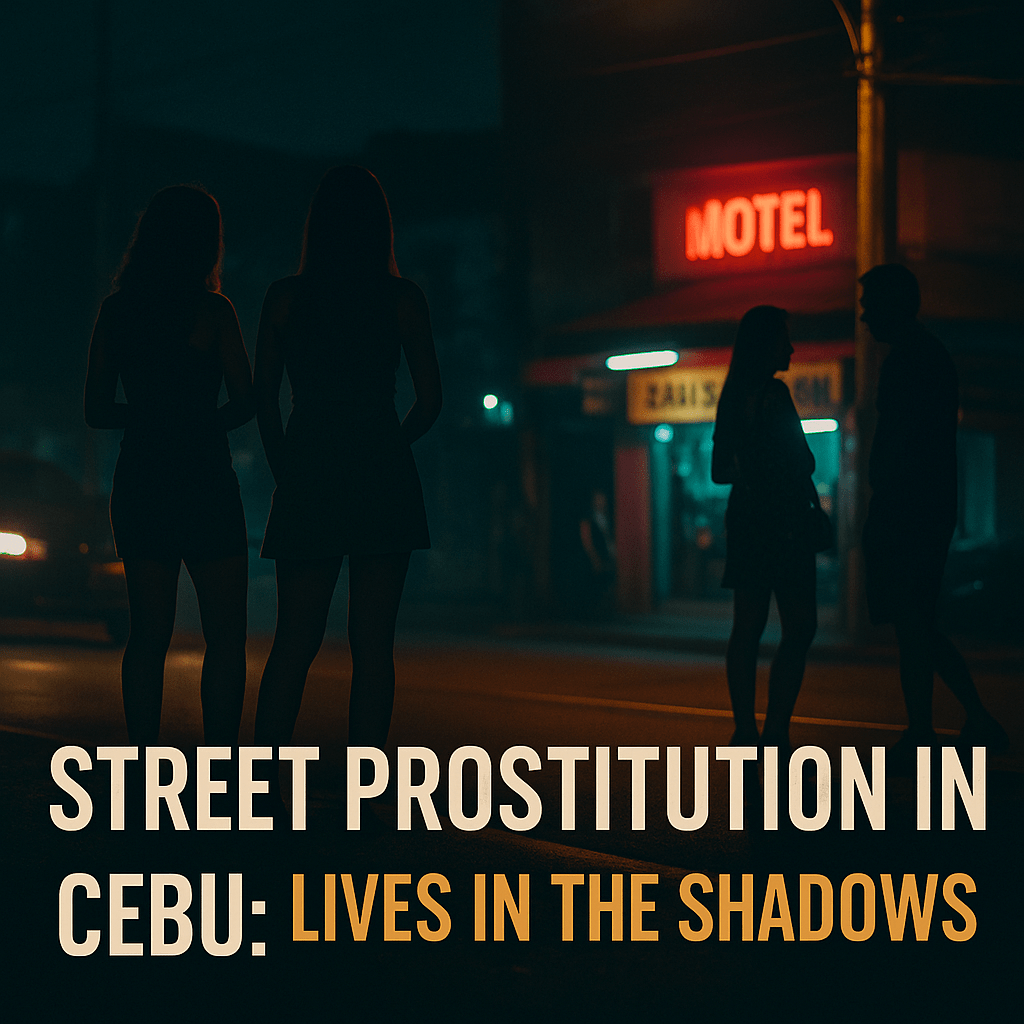
Let’s not sugarcoat it—street prostitution in Cebu exists, and has been around for decades. From quiet alleys to certain street corners, there are known spots where “the trade” happens, especially at night. Locals know it, tourists notice it, and yet it continues like clockwork, barely talked about but widely understood.
While most people turn a blind eye, others wonder—is this legal? What does the law say? And why does it still happen despite regular crackdowns?
How It Works on the Streets
Unlike massage parlors or online setups, street prostitution is more direct. You’ll usually see women, sometimes men or trans individuals, standing or walking around certain areas after dark. Dressed to catch attention, they offer their services discreetly, usually with a glance, a whisper, or a casual approach.
May mga “mama” na nag-aalok din ng “girls”, acting as fixers or pimps. Some do it solo, others are part of informal groups. The setup is often fast—agree on the price, choose a place (motel, room-for-rent, or even a car), then it’s done.
Sa mga lugar na medyo matao, minsan pa nga, may parang sistema na talaga. Everyone knows their role, and everyone knows not to make noise about it.
Why It’s Still Common
Cebu is a tourist-heavy city, with a mix of locals, foreigners, seafarers, and OFWs coming and going. And wherever there’s tourism, the demand for adult services goes up.
But beyond that, there’s the issue of poverty and lack of opportunity. Many of those in street prostitution are women from low-income areas, single moms, or people who didn’t finish school. For them, it’s a way to survive—not ideal, not glamorous, but quick cash.
Some make ₱500 to ₱1,500 a night. Not big money, but still more than a minimum wage job in some cases.
What Does the Law Say?
Under the Revised Penal Code, prostitution is illegal. The law clearly says:
- Anyone who offers sex in exchange for money can be punished with imprisonment (arresto menor or arresto mayor)
- Fines range from ₱2,000 to ₱20,000, depending on the case
- Repeat offenders can face harsher penalties
If there’s pimping or trafficking involved, that’s where RA 9208 (Anti-Trafficking in Persons Act) comes in. This law carries heavier punishments, especially if minors or coercion are involved—up to life imprisonment and millions in fines.
So technically, bawal talaga ito. But in real life? It’s complicated.
The Workarounds and Reality
One reason street prostitution continues is lack of enforcement. Police patrols do happen, and sometimes there are raids. But they’re not consistent. Some officers look the other way. Others simply “warn” the girls or ask them to disappear for the night.
There are also informal “agreements” in some areas, where sex workers know when to hide, where to go, and when it’s safe to be out. Sa madaling salita, may sistema—at may timing.
Some are even tipped off before a raid happens. Others move to different areas when things get too hot. It’s a cat-and-mouse game, and the street workers usually know how to play it well.
What About the Workers?
Behind the makeup and mini skirts are real people with real stories. Many didn’t grow up dreaming of this life. Some got into it due to abusive partners, unpaid debts, or just plain desperation. Others choose it because they feel it’s the fastest way to provide for their kids.
Still, it’s a tough life. Risk of violence, STI, and police abuse is always there. Wala rin silang benefits, legal protection, or even regular health checks. Some work under syndicates, while others get harassed or cheated by clients.
Despite all this, many keep going back—not because they want to, but because there are very few options.
Should We Be Talking About This?
Yes. Because ignoring it won’t make it go away. Street prostitution in Cebu is a symptom of deeper problems—poverty, lack of education, weak law enforcement, and outdated policies.
Some groups advocate for decriminalization or at least better protections for sex workers. Others push for rehabilitation and livelihood programs. But for now, nothing concrete has changed.
We still live in a country where the person selling their body gets punished, but those paying for it? Often walk away free.
Street prostitution in Cebu is real. It’s not hidden in the shadows anymore—it’s there, on sidewalks, near terminals, in alleys. Whether we agree with it or not, we can’t deny it exists.
The law says it’s illegal. But the system allows it. And the people in it? They’re just trying to get by in a world that hasn’t given them many choices.
Maybe it’s time we stop pretending they don’t exist. Maybe it’s time we start talking—not just about the crime, but also about the cause.
Because at the end of the day, every story on that street corner has a human being behind it.
 Mike m. luster